 Kent Ornithological Society
Please read below Ravi's personal account of last year's MigFest at Spurn where he won the Martin Garner Young Birder of the Year Award:
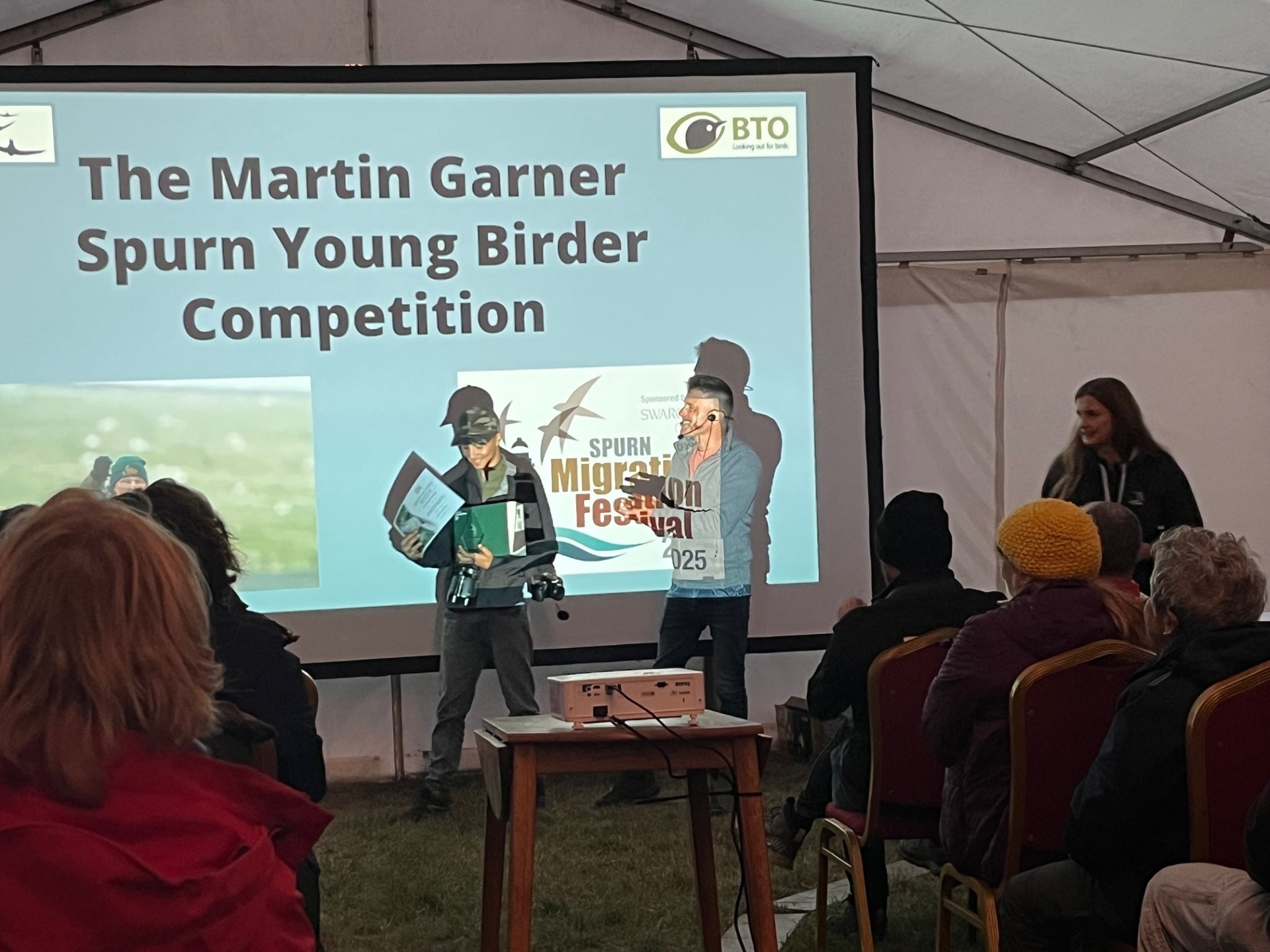
My name is Ravi Grewal, I am a young birder and trainee ringer based in North Kent with a focus on the Hoo Peninsula. During Migfest 2025, I was fortunate enough to experience and go on to win the Martin Garner’s Spurn Young Birder of the Year (MGSYB) competition in the senior age group category (14–16). It was an incredible opportunity that challenged my bird identification skills and general knowledge, and introduced me to an inspiring community of birders I had never experienced before.
Birding has been a major part of my life for several years and has completely transformed how I spend my time. I have been fortunate enough to meet many other young birders over the years including two previous winners of the MGSYB. It sounded like a great opportunity, so I applied for the competition in the summer by filling out an online form, describing my birding experiences and answering a couple of simple identification questions and I was lucky enough to be accepted to the finals which took place at Spurn! Before Migfest, I had never been any further north for birding in England than Weeting, Norfolk, so I was very excited to arrive at Spurn in the afternoon of Friday (12th September). The area was full of warblers, Meadow Pipits and fellow birders. The combination of birds and people proved to be a common and welcome theme throughout the weekend.
The first full day of the event was on the Saturday (13th). I started the day at the Warren for dawn and did my best to warm up my skills with the help of Jacob Spinks who had helped coach me prior to Migfest with what to expect there. After a few hours, I made my way to Sandy Beaches caravan park club house for 0900 where our competition ‘base’ was. There were three young birders from both categories and all six of us would be in a rotation of birding in different habitats / styles with different judges who were experts in their area. These areas were birding the Bushes, Visible Migration (VisMig), Seawatching, Estuary Watch and the Lab Test. Each round lasted 20 minutes and we were asked to identify three species of the judge's choice at each area. Following this was three general knowledge questions (e.g. species plumage, size, breeding distribution, population change, migration, best weather conditions) relating to the species often seen when birding in these habitats (i.e. bushes, estuaries) or during these sessions (seawatching, VisMig). After this we were encouraged to relax and just point out anything we wanted. In the Lab Test, we were given some specimens of taxidermy birds (Greenfinch and Starling) which we had to identify and point out certain feather groups which was second nature to me as a ringer. We were also asked about population trends and some bird calls and songs which were assisted with an image of the habitat the call would be expected in. The final part of the Lab Test, is to discuss the reasons behind the population changes of two species chosen by the judge: one in steep decline and the other increasing rapidly.
Some of the senior category questions I was asked included: VisMig – What three species of finch on the following list have white rumps? Chaffinch, Crossbill, Brambling, Twite, Bullfinch, Linnet, Rosefinch, Goldfinch. This was one question I got wrong and it was completely new information to me. I’m sure many would agree the first two are easy, but the third stumped me. I guessed Rosefinch as it was the one I was least familiar with, but I knew it had to be wrong. I later found out the third species was Goldfinch! A bit shameful considering I had seen hundreds in the hand – but could you perfectly colour in an outline of a familiar bird without a reference and without error? Estuary Watch – What species of rodent influences the breeding success of Curlew Sandpipers in Arctic breeding grounds? Another hard one but I had been revising skuas a lot in recent weeks and remember reading about the importance of a particular mammal for breeding of Long-tailed Skuas in their Arctic breeding grounds, the Lemming! I spent half the time trying to fathom how a Curlew Sandpiper is supposed to eat a Lemming but with no better answer I locked it in. I later realised it was about reduced predation of Curlew Sandpipers due to Lemmings being the focus of predators which made much more sense! Seawatch – Put the following shearwater species in order of wingspan size. Sooty Shearwater, Barolo Shearwater, Balearic Shearwater, Manx Shearwater, Great Shearwater. Another thinker but managed to get the right order: Barolo, Manx, Balearic, Sooty, Great. There were many more excellent questions that tested my ornithological knowledge.
Once all the tests had been completed, I got to enjoy my half hour break due to the rotation which I just spent birding anyway. We were then presented with a fantastic lunch prepared by the Spurn Ladies, followed by the announcement of the results. I was delighted to hear that I was selected as the winner of the Senior category. Milo Dawes won the Junior category (under 14s) with slightly different but equally challenging questions.
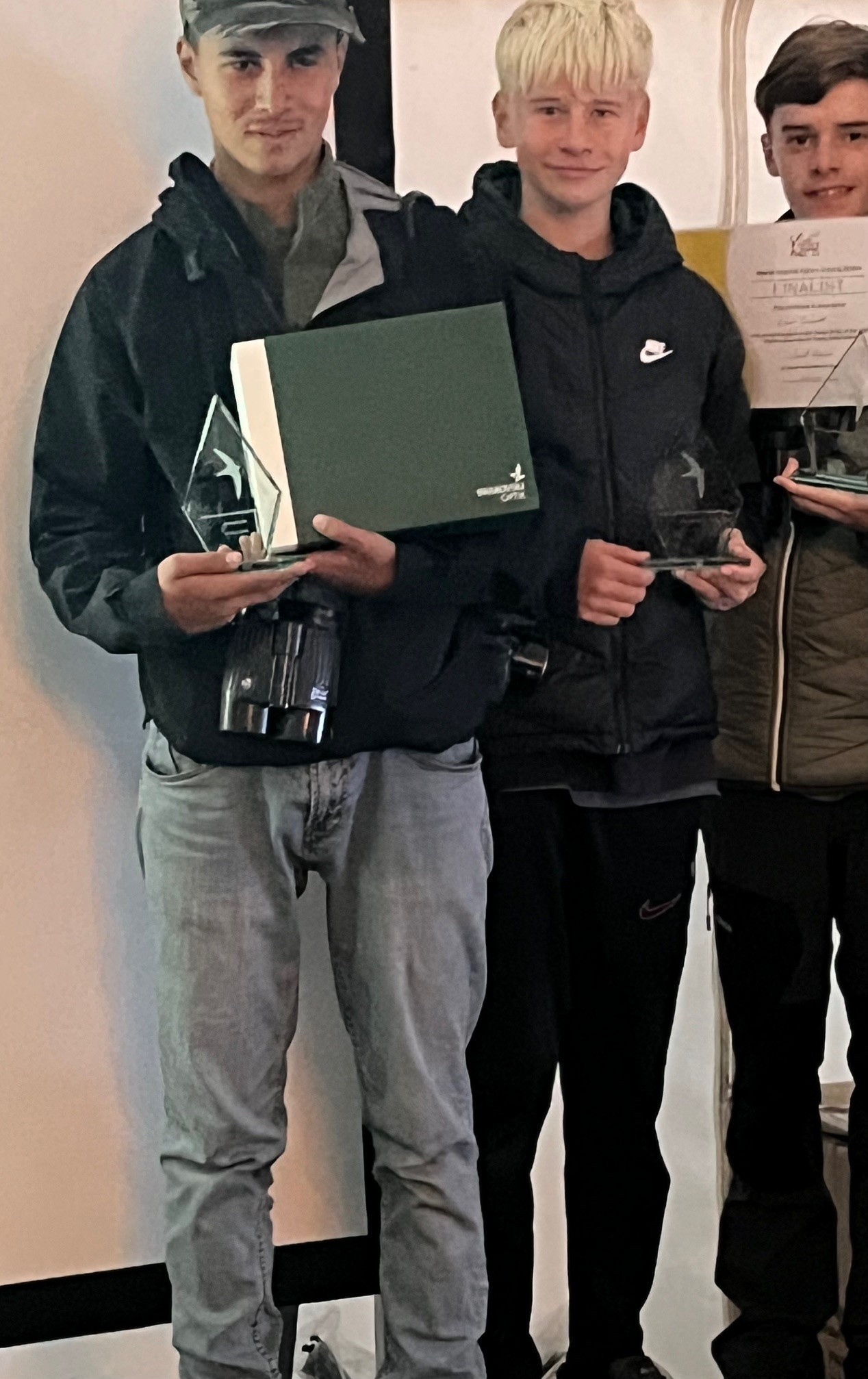
The evening prize ceremony was a memorable end to the day, and it was fascinating to learn more about the background of the competition and the legacy of the great Martin Garner. The finalists had seats reserved at the front which had some wonderful gifts and prizes on from the competition hosts, Spurn Bird Observatory and the British Trust for Ornithology (BTO), including a Spurn T-shirt, notepads, badges and more. I also received a one year membership to Spurn Bird Observatory, BTO, British Birds, Oriental Bird Club and Rare Bird Alert! As the winner of the senior category, I received an incredible pair of CL Companion 8x30 Swarovski Binoculars! A fantastic prize which has gone a long way already and I’m sure will serve me well throughout my birding career. This also meant I could return the binoculars Murray Orchard had very kindly lent me for many months after my previous pair broke! All finalists received the memberships and subscriptions mentioned above, with junior winner, Milo, also receiving a pair of Opticron binoculars.
It really was a great experience, and I would definitely recommend the competition, or simply attending Migfest, to any young birders as it was so amazing to meet a whole load of new people and friends that share a passion.


 @KOS_Birds on Instagram