 Kent Ornithological Society
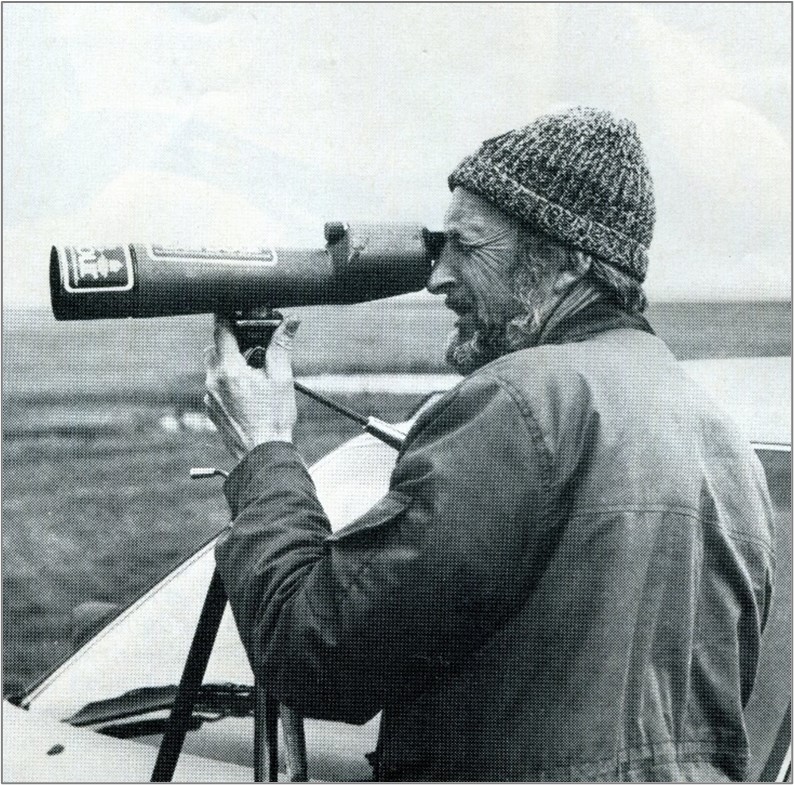
Don Taylor was born on 2nd October 1938 and died on 27th October 2023. He had been afflicted by Alzheimer’s disease for a few years but only recently had his mobility been severely impaired. After a fall and a spell in hospital, he was able to return home to be with his wife Trish when he died. And so passed one of the leading figures of the Kent birding world for the past fifty years.
He attended Haberdashers’ Aske’s Boys’ School in Hertfordshire, and later Loughborough College where he graduated in 1962, but his formative birding experiences were centred on north London. For much of the 1950s, he lived in Hampstead, close to the Heath where he saw such London rarities as Short-eared Owl, Jack Snipe and Shore Lark. Cycle trips took him all around west and north London, finding Great Grey Shrike, Leach’s Petrel and flocks of Smew. As he met local ornithological ‘celebrities’ and attended LNHS meetings, watching, studying and recording birds soon became a real enthusiasm.
In those days, teenagers (and perhaps even their parents) thought little of long-distance cycle rides. On one memorable trip to Cley in Norfolk, Don left his rucksack in a hut while he walked along the East Bank. Richard Richardson, revered by all who visited Cley, was some way off and gesticulated upwards. Don could not see what it was but, returning to the hut, found that Richard had sketched a Bee-eater flying towards Hampstead on his notebook’s cover. Sadly, he later lost that notebook, but that kind attention had Don bewitched, bothered and bewildered, and hooked on birds for life.
Don had married Jane Collins, and their son Kevin had arrived, by the time that they moved to Canada, where they lived from 1962 to 1964, returning with a daughter Sheila as well. It was in Canada that he was introduced to Bird Races, where you see how many species you can find in a single day, something that became a regular fixture in his birding year. On an early one with Canadian friends at Point Pelee in 1963, he notched up 135 species – and 55 of them were new to him!
Returning to Britain, he was soon living in Aylesford. This placed him close to the centre of Kent, and he remained in this general area for over fifty years. Most of Don’s professional life was spent at Sutton Valence School, south of Maidstone, where he taught Design Technology from 1969 to 1993. He was soon at the centre of Kent birding, too. He became recorder for Central Kent as early as 1965 and served in official capacities in the society for many years, including as President from 2001 to 2015.
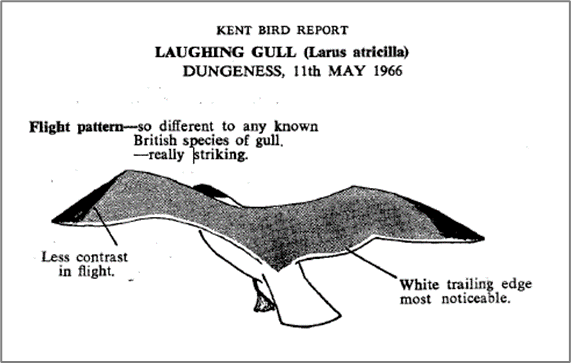
It wasn’t long before he made his mark on bird-finding in the county, when he and Billy Buck encountered an adult Laughing Gull at Dungeness on 11th May 1966. This was the first for Britain for a while, until a Sussex record from the 1920s was disinterred from the archives. Don was always keen to add to his Kent list, and for quite a few years headed the table; his final tally was 372 species.
He was, of course, a regular visitor to the county’s hotspots around the coast and in the Stour valley, but he also became a great exponent of patch watching. The area in which he lived was not the most exciting but he found worthwhile sites, first at Langley Park Farm from 1970 to 1981 and then at Boughton Park and Wierton Hill Farm from 1985 until 2018 when he and Trish moved to Bristol. At both, he was enthusiastically supported by Bob Bland, who recalls Don’s energy, and how difficult he could be to keep up with, but thinks there was never a cross word between them. The time that Don spent on these sites was staggering but the value was obvious. He knew everything about the seasonal and long-term changes, how birds used the site, how to find the difficult species, and of course that effort paid off in finding scarce and rare species. There were many of those in both places, including a Woodchat Shrike at Langley Park Farm, but the outstanding one was the White-throated Needle-tail at Boughton Park in May 1991. His accounts of those patches appear in two books, Birdwatching in Kent (1985) and Birding in Kent (1996), and in the Kent Bird Reports for 1983 and 1998. Don’s writing style may not be the most lyrical or fluid, but those accounts are evocative reads and stand as valuable records. Don would have been shocked to see Langley Park Farm as building spreads over it and there is scope for someone to investigate the changes in both areas since his time.
Don was meticulous in record-keeping and processing information. His stint as editor of the Kent Bird Report from 1969 to 1981 saw the report transformed in the amount, quality and accuracy of content. He also oversaw the introduction of many more sketches and photographs than previously, raising the attractiveness of the report. During the late 1970s, in addition to preparing the KBRs – and, not to forget, going to work – Don with David Davenport, another stickler for accuracy, was somehow finding the time to put together the Birds of Kent. Don had the knack of persuading people to help with projects, but always subtly and with no obvious pressure. I was in my mid 20s and of unknown ability when asked to join the Birds of Kent writers, yet Don (with David) took the risk and steered me through the process, with the result that I had the great satisfaction of contributing to the book and joining the Kent Bird Report writing team (and find myself doing it still, forty-five years later, thanks Don!).
After Canada, Don had continued with bird races. He put together a Kent team for the first Country Life/RSNC competition in 1986, fund-raising as well as listing, and had the great satisfaction of winning against groups from around the country. The fact that he did so can be attributed not least to the way Don steered his team, without seeming to, to contribute individual strengths to the joint effort. Bird races require considerable skill, in knowing where birds might be found and managing the time available, but also can be fun with chance encounters adding to that. Don’s team found or saw quite a few notable species; that Laughing Gull was one, while later rarities included Squacco Heron, Red-rumped Swallow and Little Egret (well, that was 1988!). But they didn’t always win, easy birds were missed, and the weather could be rotten. At times like that, the team came to think that spring can really hang you up the most.
Among the non-avian features of those bird races was Don injecting insulin as the team was shooting up the M2, and his instructions on how to cope if he became hypoglycaemic. OK, he had been living with type 1 diabetes for quite a while, but his low-key yet efficient way of dealing with it was striking. This was as true high in the Bolivian Andes as in Kent.
One of the admirable things about Don was his calm drive to achieve his ambitions. He showed this throughout his involvement with the birding world and, I feel sure, in other parts of his life. I can imagine that to everything he brought the same quiet dedication and purposefulness. There was of course sometimes a little conflict between different interests. Don was a great jazz fan, and I recall that days out on Saturdays often had to end in time for Jazz Record Requests on Radio 3.
His first marriage had ended and during the time that I knew Don he was with Trish Pringle. She provided huge support to him over the years, not to mention putting up with his enthusiasms (or were they obsessions?). To me, and I’m sure to other birding visitors to Loose, she was always so kind, considerate and interested in our strange activities. Don seemed accepting and was characteristically matter-of-fact when he told me of the Alzheimer’s diagnosis though obviously it must have been hard to receive – but probably even harder for Trish who has looked after him during these last years. Our condolences and best wishes go to her, and to Kevin and Sheila, to Trish’s daughter Caroline and to the wider family.
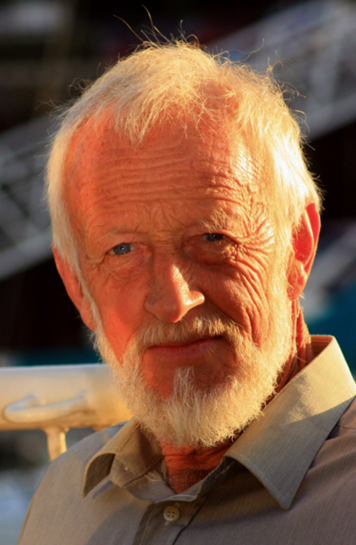
One of Don’s sidelines was leading bird tours, generally for Ornitholidays around Europe but sometimes further afield. On one to Lake Neusiedl in 1968, they bumped into Geoff Burton who was on his first birdwatching holiday, on a shoestring and with little idea of how to get to the good places. Don offered the chance to join the group for a share of transport costs and threw in his good company and the benefit of his knowledge: typical of his kindness.
Later, Don became a more adventurous traveller, in search of birds generally and particularly on a quest to see all the waders of the world. I enjoyed a few with him, including to Ecuador and the Galapagos, where I recall being with Don when we ‘cleaned up’ on Darwin’s finches! He had earlier taken in good heart the appalling pun “Can you see the Iguana, Don?”.
He never quite completed his wader quest, not helped by taxonomic splitting making it increasingly unreachable. Trips included the long boat journey out to St Helena for the Wirebird, and – just in time – a quick jaunt to Morocco for the soon-to-disappear Slender-billed Curlew. I was with him on that one and what comes to mind most strongly is the quiet way in which Don had organised the trip. For example, he had somehow arranged a guide to show us around and to keep away the pestering urchins. And then, driving back to Tangier, our dilapidated hire car broke down; he calmed my panic and persuaded me to speak French (a language that neither of us spoke) to get the thing fixed. The more gruelling ones were with fellow obsessives Tony Prater and David Rosair. One memorable trip was to Isla de los Estados in Argentina, travelling in a small, motorised yacht in rare calm conditions in the Drake Passage, climbing to the high plateau and eventually seeing the Fuegian Snipe at ten metres range. Another to Indonesia gave them flight calls and sightings of the ultra-rare Sulawesi Woodcock. His greatest disappointment was not seeing the Chatham Islands Snipe despite crawling around on hands and knees underneath a solid growth of Tree Hebes.
Out of the wader quest came another of Don’s books: the well-reviewed Waders of Europe, Asia and North America (2005), excellently illustrated by Stephen Message. But for us in Kent, his name will always be most associated with the Birds of Kent. First published in 1981, with a revised edition in 1984, it is starting to show its age now but remains the definitive account of birds in the county at the time. It wouldn’t have appeared without Don and for that, and much else, we should be grateful.
If you knew him or have enjoyed his books, take five to remember Don, and maybe listen out for a strange meadowlark.